-scaled.png)
-2048x1135-1.png)
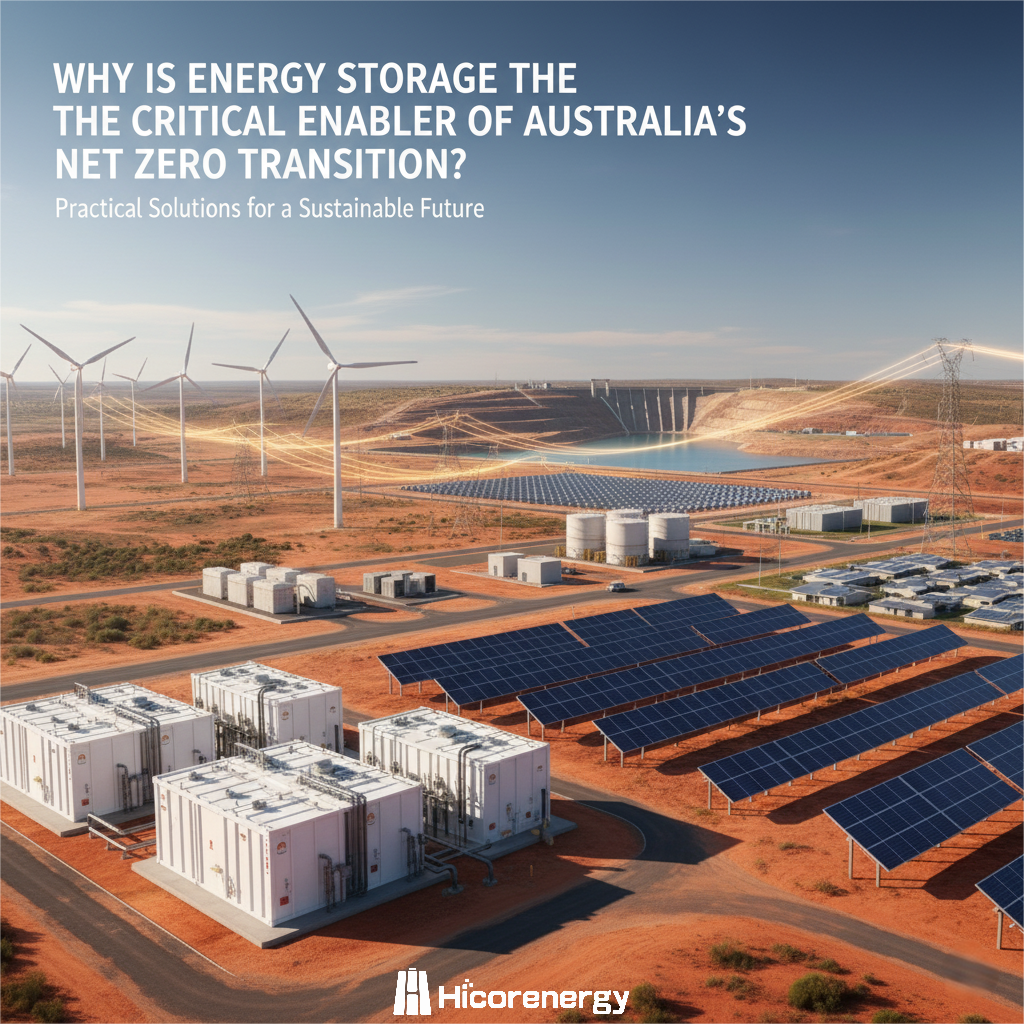
Energy storage bridges the gap between variable renewable generation and consistent demand, making it essential for Australia’s net zero transition. By stabilizing the grid, supporting renewable energy integration, and lowering reliance on fossil fuels, storage systems ensure a reliable, affordable, and sustainable renewable energy future for Australia
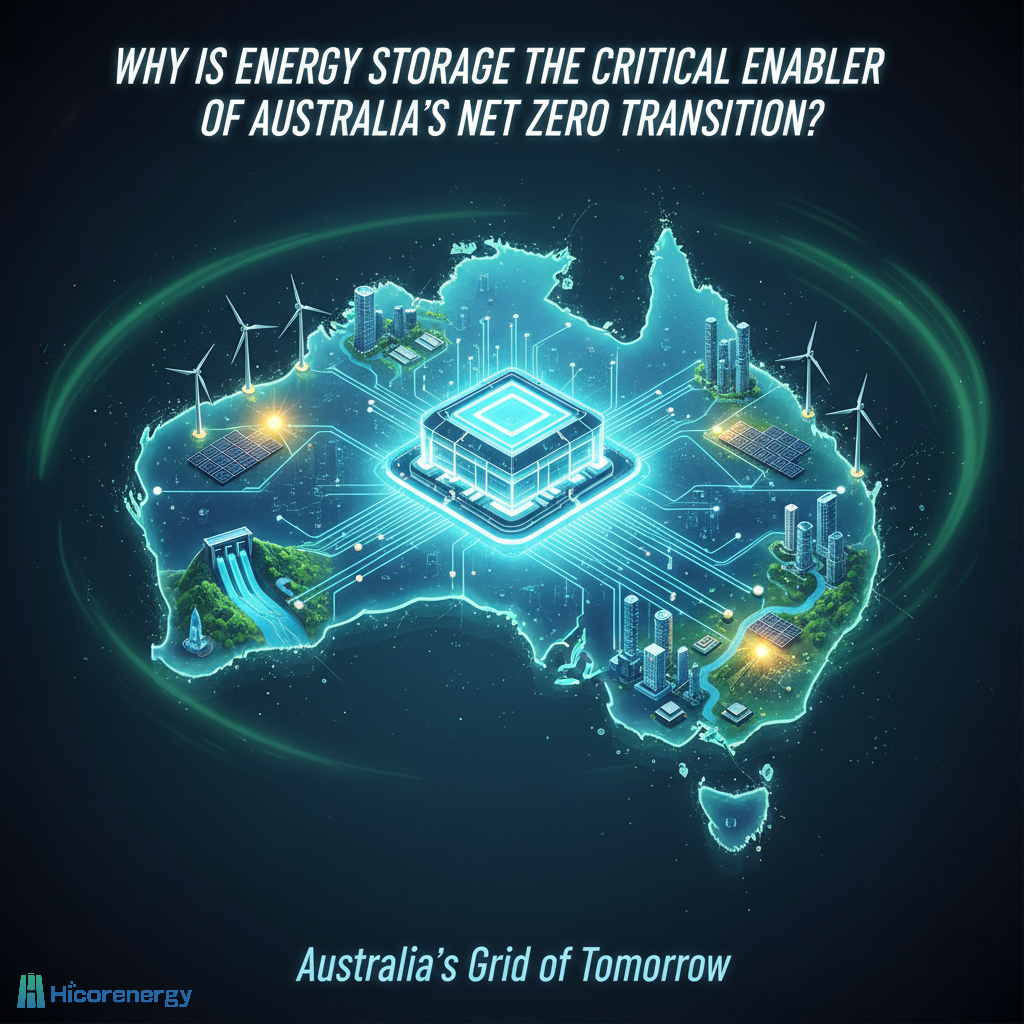
Table of Contents
Beyond the Battery: Exploring Different Types of Energy Storage for Australia
Australia’s renewable energy future depends on a diverse mix of storage technologies. While lithium-ion battery storage dominates due to scalability and declining solar battery cost, pumped hydro in Australia remains a cornerstone of long-duration storage. Pumped hydro projects can store excess renewable energy and release it during peak demand. Emerging options such as thermal storage, compressed air, and hydrogen also hold promise, though many are at pilot or demonstration stages. Together, these types of energy storage will help overcome intermittency challenges, ensuring flexibility across the National Electricity Market (NEM Australia) and building resilience for the future of Australian energy.
Powering After Sunset: How Battery Storage Supports Solar and Wind Farms in the NEM
Battery storage solar farms are becoming essential in NEM Australia, capturing renewable energy when generation exceeds demand and discharging it after sunset. This capability not only supports grid stability but also reduces curtailment of renewable energy, enhancing the value of both solar and wind investments.
From Grid-Scale to Home: The Rise of Residential Battery Storage in Australian Households
The shift toward renewable energy integration has driven growing adoption of residential battery storage in Australia. Rising electricity bills and concerns about energy security have encouraged homeowners to invest in home battery systems. Hicorenergy supports this demand with advanced solar battery storage solutions, such as the I-BOX 48100R and Si LV1, offering safe, reliable, and long-lasting residential energy storage battery options. These systems deliver over 6,000 cycles, up to 20 years of design life, and high round-trip efficiency. With flexible installation, compatibility with most inverter brands, and scalability up to hundreds of kilowatt-hours, Hicorenergy’s solutions are tailored for both urban households and remote communities. For households exploring solar battery cost considerations, such solutions represent a balance of affordability, performance, and safety while ensuring lower reliance on the grid.
Addressing Challenges: The Path to Scaling Up Energy Storage in Australia
Despite strong momentum, energy storage challenges in Australia remain significant. Solar battery cost and financing hurdles can deter homeowners, while large scale battery storage projects often face long approval processes and regulatory complexity. Pumped hydro Australia projects, though promising, involve long construction times and environmental considerations. Furthermore, supply chain instability and grid scale battery funding constraints limit rapid expansion. Overcoming these barriers requires supportive policy frameworks, investment incentives, and streamlined approval processes. Strengthening local supply capabilities and encouraging collaboration between government, industry, and technology providers will be key to ensuring energy storage grows at the pace required for Australia’s net zero transition.
The Future of Energy: How Storage Will Secure a Reliable, Affordable, and Low-Emission Grid for Australia
Looking ahead, energy storage will underpin the future of Australian energy by ensuring a reliable renewable grid. With increasing penetration of wind and solar, storage systems will provide critical services including peak shaving, backup power, demand response, and renewable energy integration. Hicorenergy’s scalable solutions, such as the C5° system and commercial Si Station 230, demonstrate how advanced technology can serve both residential and industrial needs. These products feature remote monitoring, wide operating temperature ranges, and long design lifespans, making them well-suited to Australia’s diverse climate. By combining innovation with affordability, Hicorenergy is supporting Australia’s renewable energy future, helping build a low-emission, stable, and cost-effective energy system.
Conclusion
Hicorenergy offers residential battery storage, commercial systems, and large-scale solutions designed for safety, scalability, and efficiency—empowering households, businesses, and utilities in Australia’s renewable energy transition.
📩 Contact us:
service@hicorenergy.com | WhatsApp: +86 181-0666-0961
-2048x617.png)
 English
  Español
  Deutsch
  Français
  Italiano
  Bahasa Indonesia
  Svenska
  Română
  Українська
  Tagalog