-scaled.png)
-2048x1135-1.png)
Properly storing lithium batteries is essential for maximizing performance, safety, and longevity in energy storage systems (ESS). This article explains ideal conditions and best practices for storing lithium batteries, from temperature and humidity to safety protocols and maintenance tips. You’ll learn how to store lithium batteries the right way to preserve capacity and ensure long‑term reliability.
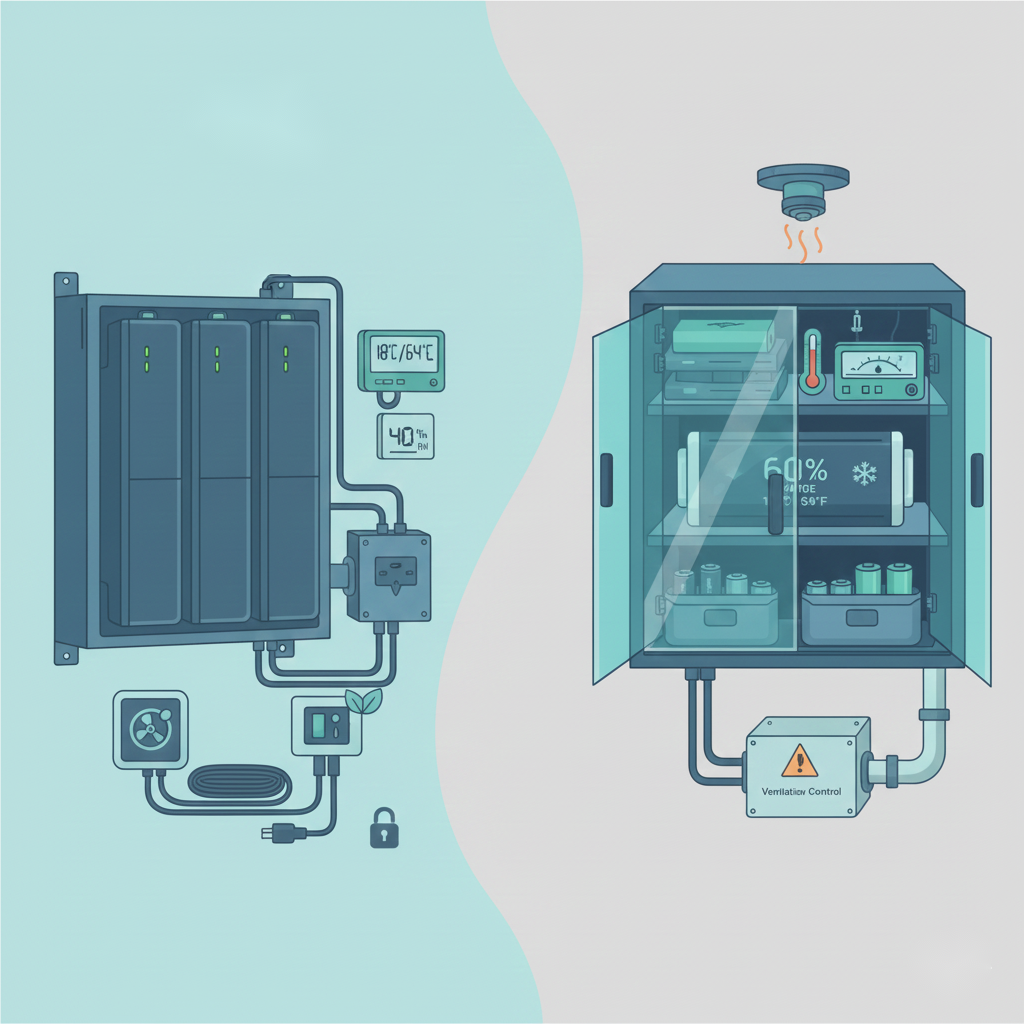
Table of Contents
What Are the Best Long‑Term Storage Conditions for Lithium Battery ESS?
When storing lithium‑ion battery energy storage systems long term, the environment you choose significantly affects lithium‑ion battery longevity and safety. Ideal lithium battery storage conditions keep temperature and humidity stable, minimize stress on the battery’s chemistry, and prevent degradation. For long‑term storage, a partial state of charge (SOC) of about 40 %–60 % is recommended, as storing at full charge accelerates aging while low SOC risks deep discharge damage.
Temperature control is critical: the recommended storage range is generally 15 °C to 25 °C (59 °F–77 °F) in climate‑controlled spaces, avoiding extreme heat or cold that can permanently reduce capacity or even cause safety hazards.Controlled humidity (ideally under 60 % relative humidity) prevents corrosion and internal short circuits.For large ESS installations, integrate a battery management system (BMS) for lithium batteries that monitors cell voltages and SOC during storage, ensuring safe disconnects and balancing without human intervention.
How to Maintain Optimal Lithium Battery Health During Storage?
Maintaining optimal health while storing lithium batteries isn’t just about putting them away — it’s about proactive battery maintenance and monitoring. To ensure your ESS retains capacity and performs well after storage, regularly check voltages, maintain the recommended SOC, and use a BMS to auto‑balance cells and flag issues early. This helps prevent battery imbalance and degradation over months or years of disuse, encouraging you to keep reading for step‑by‑step storage preparation, safety protocols, and commissioning checklists.
What Are the Safe Temperature and Humidity Ranges for Storing Lithium Batteries?
Safe temperature and humidity ranges are foundational to proper lithium battery storage. Temperature swings and extremes are a major cause of capacity loss and safety risk. For lithium‑ion battery storage, the generally accepted optimal storage temperature is 20 °C to 25 °C (68 °F–77 °F); sustained heat above this range accelerates chemical breakdown, while cold conditions can reduce capacity and delay charging.
Humidity also matters. Excessive moisture can corrode terminals and internal connections, leading to short circuits or thermal issues. Ideal relative humidity is below ~50 %–60 %, using desiccants or dehumidification in storage rooms to maintain dryness. ESS facilities should be well‑ventilated but sealed from moisture ingress, ensuring batteries remain dry and chemically stable. In industrial settings, humidity and temperature sensors tied into the BMS or facility HVAC can automate environmental control, reducing manual intervention and improving lithium battery storage conditions overall.
How Should You Prepare a Lithium‑Ion Battery ESS for Seasonal or Extended Storage?
Preparing a lithium‑ion battery ESS for seasonal or extended storage begins well before physically placing the system into storage. First, charge batteries to the recommended SOC (about 40 %–60 %) and confirm through the BMS that all cells are balanced and within safe voltage thresholds. Disconnection from on‑site inverters or loads prevents unintended cycling, and securing the ESS in a clean, dry, temperature‑controlled room prevents environmental stress.
Label and log each battery bank, noting SOC, voltage, and date of entry into storage so periodic checks can occur every 3–6 months. Use battery cycling vs. storage strategies as needed: occasional controlled cycling refreshes the chemistry and keeps SOC within the ideal window, reducing long‑term degradation. For installed ESS units like hicorenergy’s modular solutions, ensure system firmware and the BMS for lithium batteries are updated before storage and configured for low‑power sleep modes to minimize background drain.
What Are the Critical Safety Protocols for Commercial & Home Battery Storage?
Safety is paramount when storing lithium batteries, whether in a commercial plant or a home ESS. Always store batteries away from flammable materials, with clear access routes and fire detection systems installed. Smoke and thermal sensors linked to alarms help detect early signs of thermal runaway or overheating.
For larger ESS installations, ensure compliance with local fire codes and standards such as UN 38.3 or UL 1642, particularly if batteries are removed or added in bulk. A battery management system (BMS) provides automatic safety cut‑offs if conditions go outside safe ranges, and periodic physical inspections for swelling, leakage, or corrosion help detect problems early.
At home, use dedicated battery cabinets or racks with proper spacing to prevent short circuits, keep terminals insulated, and never store batteries in hot garages or unventilated attics where temperatures and humidity can fluctuate widely. Ground‑fault protection and certified chargers with overcharge/overdischarge cut‑off add extra layers of safety.
Step‑by‑Step Checklist: Commissioning Your Stored Lithium Battery System
- Inspect Environment – Confirm temperature control and humidity levels are within safe long‑term storage ranges.
- Check SOC & Voltage – Use the BMS dashboard to verify all cells are at the target 40 %–60 % SOC.
- Balance Cells – Run a balancing cycle if necessary to equalize cell voltages prior to activation.
- Reconnect ESS Hardware – Reattach inverters, communication cables, and protective disconnects per manufacturer guidelines.
- Test BMS Functions – Ensure the BMS for lithium batteries communicates with the energy management system and logs data.
- Perform Controlled Startup – Gradually pressurize circuits and power systems, watching for anomalies like overheating or unusual cell drift.
- Document & Log Results – Record voltages, temperatures, and any adjustments to maintain storage history for future reference.
About Hicorenergy Products
Hicorenergy offers advanced ESS solutions with integrated BMS for lithium batteries and smart monitoring that simplifies lithium battery storage and maintenance, enhancing reliability and safety for commercial and residential installations.
Contact us:
Email: service@hicorenergy.com
WhatsApp: +86 181‑0666‑0961
-2048x617.png)
 English
  Español
  Deutsch
  Français
  Italiano
  Bahasa Indonesia
  Svenska
  Română
  Українська
  Tagalog